Your local history section – here on Darras Index
Do you want to know the history behind more than 130 properties and sites across Ponteland and Darras Hall?
Well you can find them all on Darras Index thanks to a dedicated Northumberland historian, who has spent the past 12 years compiling a series of fascinating guides to bring history to the masses.
Each of the Village Guides includes photos and an audio guide which, along with maps and old aerial photos, chronicle the stories behind popular landmarks and locations past and present.
The collection spans from Ponteland’s oldest building – the Norman St Mary’s Church – to its newest, the new Athol House in Callerton Lane.
You can find out about the very first house built on Darras Hall Estate before World War One and Ponteland’s first mansion, Eland Lodge – as well as the building of new housing in the 1950s and 60s at Thornhill Road, Ladywell Way and Dunsgreen.
Other featured landmarks include the Toll House by the bridge and The Blackbird Inn, while the guides also tell the story behind places like Waitrose – formerly West Farm – and the Temperance Hotel which became a tandoori restaurant.
We interviewed the man behind the Village Guides, Richard, who you can hear on our Spotify podcast, and asked him what piqued his interest when doing his research.
He said: “What probably gripped me the most was the workhouse in Ponteland. The workhouse was on the right-hand side going up the North Road. It later evolved into a hospital, then an old people's home. The story of the workhouse was amazing.
“Morpeth's workhouse, by contrast, was very, very Dickensian and very, very harsh, whereas Ponteland's workhouse actually seemed to have civilised conditions, civilised for a workhouse. There are stories, for example, of the Christmas dinners where they'd have plum pudding and roast beef, and they threw parties for the children.”
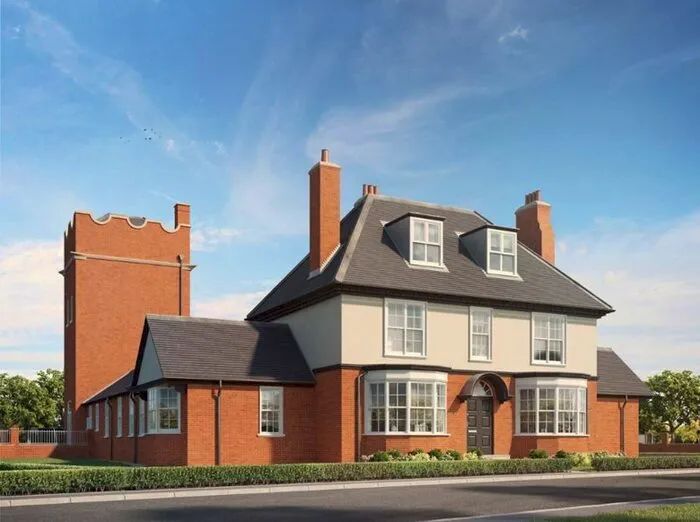
Richard also singled out The Cottage Homes – now Jameson's Manor. He said: “They grew out of the workhouses. People decided that a workhouse wasn't a fit place to raise a child, because there were tramps and everything in there, and they wanted to separate the children out from the workhouses.
“So the Cottage Homes started off as a charitable organisation to cater for children so they didn't have to go to the workhouse. They actually built houses, homes, where they would have almost a family upbringing.”
The Village Guides cover communities right across the North East and Richard, who was brought up in Newbiggin, treats his work as a full-time job. For Ponteland, he combed archive maps and local history books, listed every building worth researching on a spreadsheet, and worked through them at two a day.
What surprised him most was how often Ponteland has reinvented itself from an agricultural community and market town, to the opening up of Darras Hall, the post-war housing boom and the changes of the last 20 years, which he calls “astonishing”.
Richard has recently rebuilt his Village Guides app so local history societies can take over the guide for their own area, keep it up to date and correct any mistakes. If any group would like to do this for the Ponteland guides, email us at info@darrasindex.co.uk and we will pass your details on.
“History belongs to everyone,” he said. “It’s got to be shared.”
Listen to our interview with Richard here and find the Village Guides on Facebook here. You can read – and listen – to the 137 local guides in our Community History section.
Six thousand years in the making
Ponteland's story starts far earlier than most residents realise. Archaeological work on the site of the new school and leisure centre uncovered evidence of 6,000 years of farming, settlement and burial in the local landscape.
The oldest standing building is St Mary the Virgin, which occupies the most prominent site in the town. Nearby, the ruined Vicar's Pele Tower still overlooks the main street, a reminder of the centuries when border raids shaped how people built their homes. The Blackbird Inn has an even more surprising past: its story stretches back more than seven hundred years, and it began life as a fortified bastle house rather than a pub.
Farms, mills and market gardens
For most of its history, this was farming country, and many of the collection's stories trace farms that still stand among the modern houses. West End Farm at Berwick Hill probably dates to around 1723, while Smallburn Farm appears on Armstrong's map of 1769. Eland Hall, an 18th century mansion beside the golf club, sits on land that dates back to medieval times.
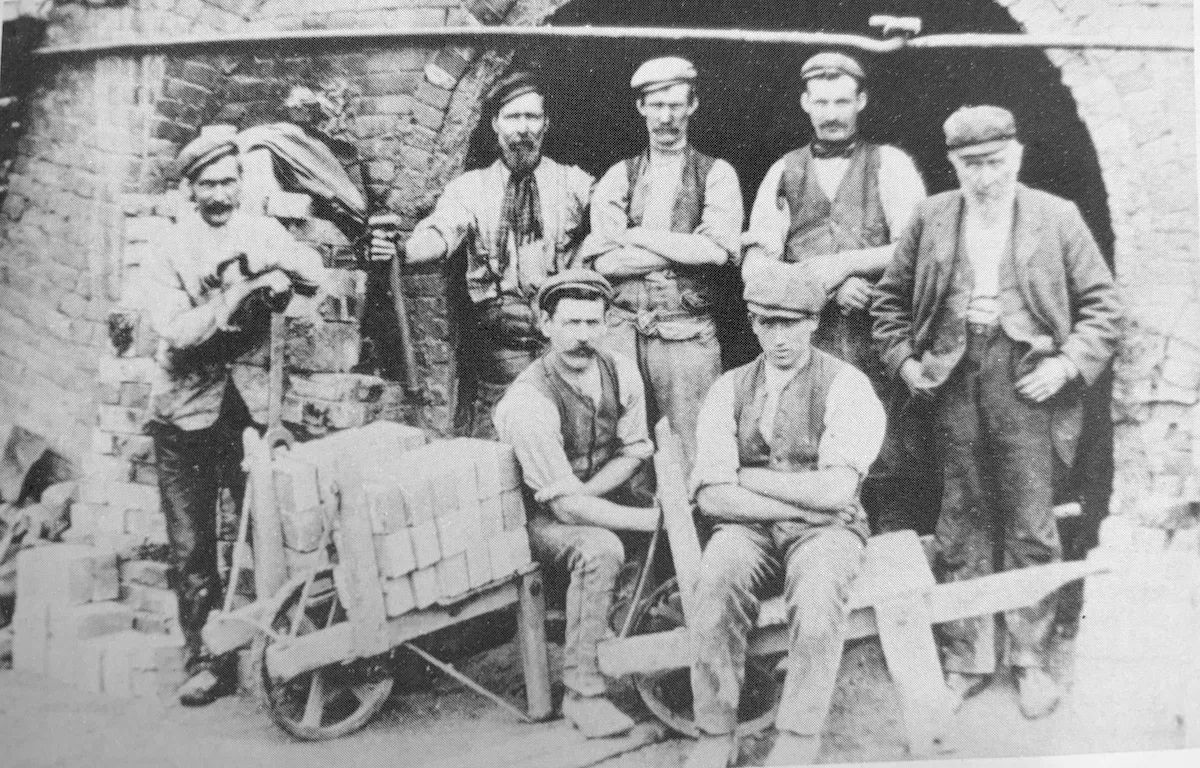
Berwick Hill gets a series of its own. In the 19th century it was large enough to support its own pub, the Bay Horse, alongside a blacksmiths, a quarry and a tileworks. South East Farm is still a working farm today.
Closer to the town, Eland Green Farm shows how farms around Ponteland once fed Newcastle before the railways arrived. Watermills such as Ponteland Mill, now Mill Rise, ground the local grain. In the early to mid 1900s, around fourteen market gardens and plant nurseries operated in Ponteland, their large commercial greenhouses visible all over the area.
Toll roads, railways and the cycling boom
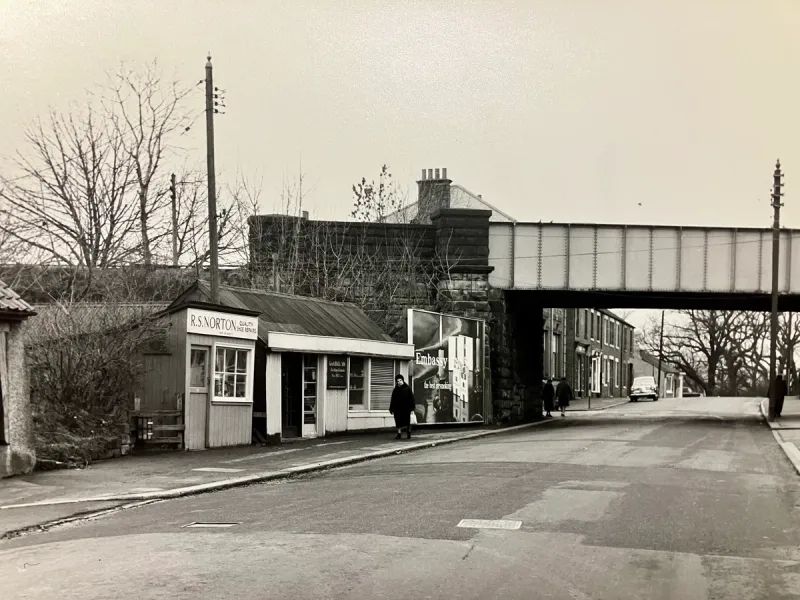
Transport shaped Ponteland as much as farming did. The old Toll House, on the site now occupied by Lloyds Bank, once controlled the turnpike running south to Newcastle and north to Scotland. A second small toll house by the bridge survives today as a shop, and the current Ponteland Bridge was built in 1925 to replace earlier, flood-prone arches.
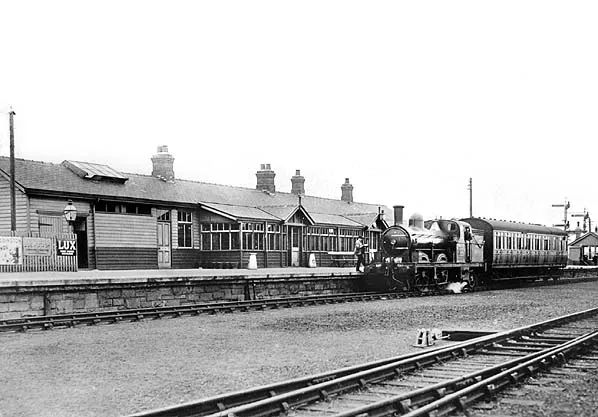
The railway arrived in 1904, and Ponteland had its own passenger station for just 24 years. The line moved the cattle market, brought Station Cottages and gave Darras Hall a station of its own. Its route lives on as a bridlepath.
Thanks to an exceptionally good road from Newcastle, Ponteland also became a favourite destination for cyclists. A grand wooden Cycling Bungalow, built in 1899, became a social hub, while Smith's Dairy Café, two temperance hotels including the Albion, and the Diamond Inn all catered for the crowds.
The making of Darras Hall
Today Darras Hall is one of the most sought-after addresses in the North East, yet its beginnings were surprisingly modest. The estate was founded by the Northern Allotments Society in 1907, its main roads were laid out in a 1910 plan, and building plots were auctioned in 1911. One of the early selling points was the estate's own sewage works.
The estate took its name from Darras Hall Farmhouse, a Victorian farmhouse still tucked away at its southern edge, and was built on land that once formed three farms. Reminders survive at Little Callerton Farm and in the site of an old watermill. The very first homes went up on Darras Road, on the corner closest to Ponteland.
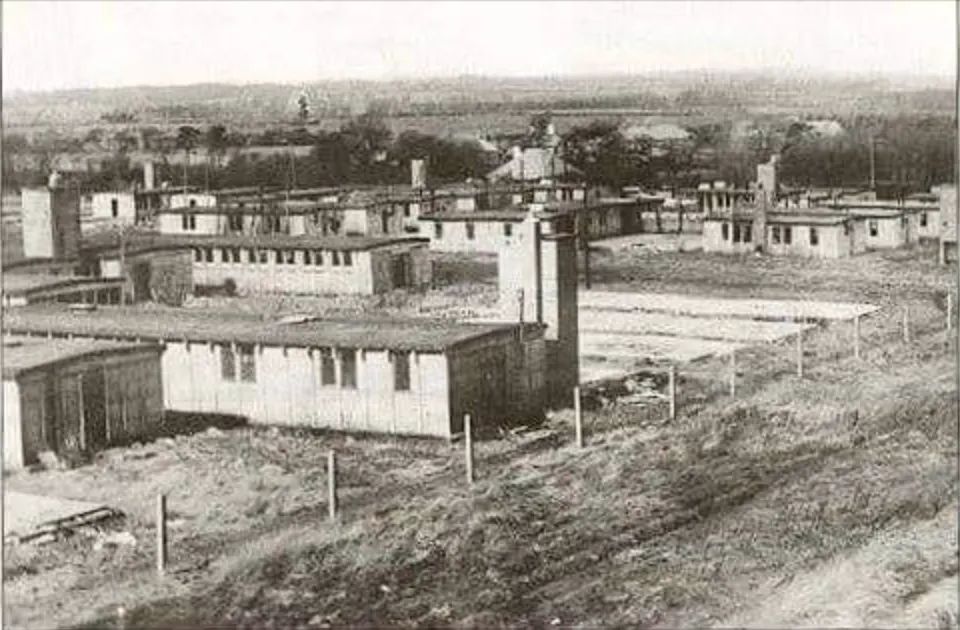
The collection also covers some unexpected chapters, including a Prisoner of War camp on the estate during and after the Second World War. From the 1960s, small houses on large plots gave way to the larger homes of Woodside, Parklands and the planned shopping centre on The Broadway, with Runnymede Road earning its reputation as one of the region's most prestigious streets.
War, care and public service
Several stories honour the area's wartime past. The Ministry of Defence Rifle Range on the edge of town has links to soldiers bound for the Somme. Forty Ponteland men who left to fight in the First World War never came home, and they are remembered at the Memorial Hall and its War Memorial obelisk. A family home at the end of Elm Road began life as a Second World War Direction Finding Station.
The collection also traces how the community cared for its most vulnerable. Little remains of the Ponteland Workhouse beyond a few walls and the name Guardians Court, though its separate children's block, Louisville, still stands. North of the town, the Cottage Homes left behind a water tower, a superintendent's house and a memorial sundial, now woven into the Jameson Manor development.
Everyday services have their stories too. Before mains water arrived in 1911, residents drew water from three public wells, including the Lady Well. The early 20th century police station, complete with cells, is now The Station House café-bar, and Ponteland Scouts have met since November 1917.
Post-war growth
The 1950s and 1960s brought some of the biggest changes in Ponteland's history. Castle Ward Rural District Council's Housing Scheme No.10 created Thornhill Road, and builders such as George Wimpey added the Ridge Estate, Dunsgreen and Ladywell Way. Bellway followed in the 1970s with Eland Haugh.
New community buildings arrived alongside the homes. Rab Butler, architect of the 1944 Education Act, opened a new school in 1960. The same year saw Ponteland's first Club and Institute, and Merton Hall gave older residents a place to meet from 1965. Merton Way brought a 1960s shopping centre to land north of the main road that had been almost entirely undeveloped.
Some of these landmarks have already passed into history themselves. The High School was demolished in 2021 and the Fire Station on Callerton Lane in 2020.
Buildings with second lives
Some of the most enjoyable stories explain what today's familiar businesses used to be. A stroll through the centre turns up plenty of surprises:
- Ateesh was built in 1970 as Barclays Bank.
- The Pont Tap occupies Stobert's Stores, a family grocer for much of the 20th century.
- Waitrose stands on the site of West Farm, which later became a garage.
- YOLO began as a 1920s Co-operative Society warehouse.
- Rialto's was the Berkley family's butcher's shop for generations.
- Ponteland Tandoori started out as a temperance hotel for cyclists.
- Jan's Kitchen was once the GEM Tea Rooms in one of the Bell Villas.
- The Smithy beside the Diamond Inn was home to generations of Moorhead blacksmiths.
- Ladywell Cottage has gone from family home to café.
- The Seven Stars, one of Ponteland's oldest pubs, has served turnpike trustees, racegoers and cyclists across three centuries.
Explore the collection
Every story in the collection is illustrated with photographs, archive images or aerial views. You can search the posts by name or sort them from A to Z.