Ponteland Scouts, from 1917
The scouting movement began in Ponteland in November 1917, the final year of the First World War. There was a surge in new recruits at this time when boys too young to serve in the army were drawn to the movement’s sense of duty and patriotism.
Scout Hut — audio guide
Sir Ralph Mortimer of nearby Milbourne Hall was very active in scouting across the whole of the North East and was District Commissioner when he founded the troop at Ponteland.
A number of local gentlemen were reported as giving the movement every support and the local bank manager acted as treasurer. They met first in premises on Hilton’s Farm.
Both Ponteland Boy Scouts and Girl Guides were present at the unveiling of the War Memorial in July 1920, a tradition that would carry on in subsequent Remembrance ceremonies.
By the following year they were campaigning to raise funds for a scout hut. They had achieved this by 1925 but the building of the hut had left them badly in debt.
A tradition which was associated with the scouts in Ponteland was their Gang Shows to raise funds. These were variety performance which musical numbers, comedy sketches and dance routines. They had started off in London and were created by Ralph Reader, a producer, actor and Scouter. The term “gang” comes from Reader saying, “Let’s get the gang together and put on a show!” They were very popular in Ponteland with over 100 cubs and scouts participating in them. These performances became a defining part of the group’s identity and reputation, running successfully through the 1950s and 1960s and raising both funds and profile.
In 1960 the Scouts moved into a wooden building they had erected on land adjacent to the redundant sewage works on the south side of the river, opposite Ponteland Mill. The land was acquired from the Ecclesiastical Commissioners and access was by a narrow-slatted timber foot bridge which stretched from what is now Kendall Cross’ car park.
In January 1966 this hut was completely destroyed by fire, which also consumed all their sporting and camping equipment resulting in the cancellation of their field trip that year. There was a new fund-raising campaign and a new hut was built in 1968 at a cost of £3,200.
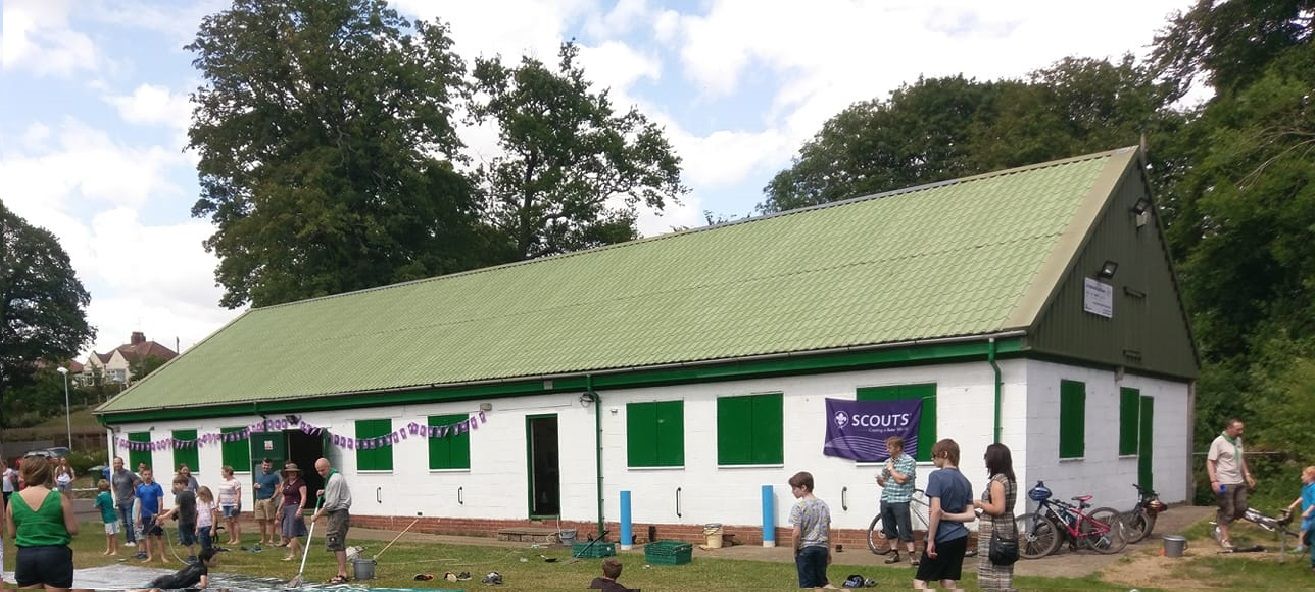
In 1995 disaster struck again when a fire severely damaged the Scout headquarters. Rather than ending the group’s progress, the fire became a turning point. With strong community backing, careful planning, and determined leadership, the building was not only repaired but transformed. Reopened in 1996, the new headquarters on the current site, offered modern facilities, disabled access, extensive storage, and space suitable for training events. It later became a base for county-level Scout training, reflecting its high standard.
By the late 1990s and early 2000’s, Ponteland Scouts had grown into one of the largest Scout groups in the country, with membership exceeding two hundred and long waiting lists. The introduction of Beaver Scouts further extended opportunities to younger children. Many members achieved the movement’s highest awards, including King’s and Queen’s Scout, and went on to make lasting contributions both within and beyond Scouting.
Throughout its history, the success of Ponteland Scouts rested on continuity of leadership, long-serving volunteers, and deep integration with the local community. From its beginnings in 1917, through war, revival, expansion, disaster, and renewal, Scouting in Ponteland adapted to changing times while remaining true to its core principles. By the time it celebrated ninety years of Scouting in the village and the centenary of the movement itself, Ponteland Scouts stood as a powerful example of how Scouting could shape generations of young people and become a lasting institution at the heart of a community.