Runnymede Road: Millionaires' Row
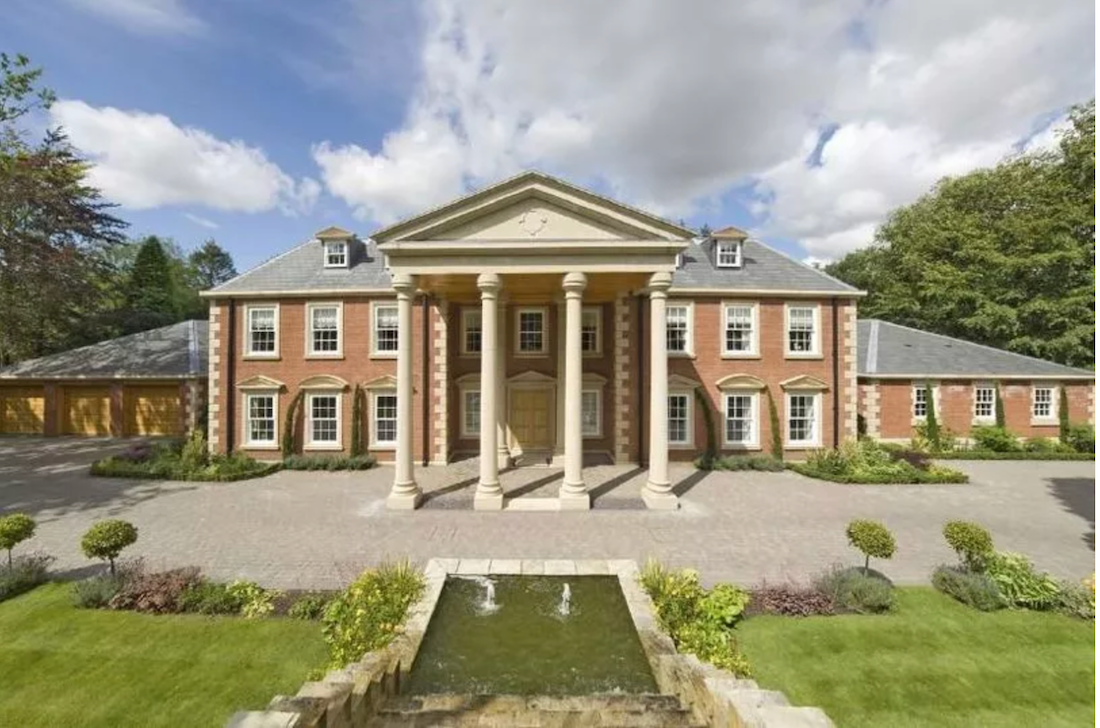
Runnymede Road in Darras Hall has earned a reputation as one of the most prestigious addresses in the North East of England. It is often described as the region’s very own “Millionaires’ Row.” Its fame comes from the remarkable homes that line it — large, architect-designed properties set within expansive, landscaped plots, hidden behind electric gates and hedges which line the road at double head height.
Runnymede Road — audio guide
Over the years, Runnymede Road has consistently topped lists of the North East’s most expensive streets, with homes regularly selling for well over £1 million, and many reaching into the multi-million-pound range. Estate agents frequently describe it as the crown jewel of Darras Hall, and its name has become synonymous with luxury living in the Newcastle area.
The Darras Hall Estate was a planned development dating from the early years of the 1900’s. It was formed from the land of three farms, Darras Hall, Little Callerton Moor and Little Callerton were put up for sale in 1907. They were bought by a consortium of businessmen interested in building their own houses and returning to the land to live. Somewhat incongruously they were called the Northern Allotment Society and were headed by the idealistic chartered accountant Joseph Whiteside Wakinshaw. He had pioneered an earlier development in Westerhope where he had built a house for him and his two unmarried sisters and had called it “Runnymede”.
To an educated young man in 1900 “Runnymede” the place where the Magna Carta was signed by evil King John would have represented the sacred meadow of English liberty, a symbol of progress and justice — a reminder that freedom had been won through struggle and must be guarded through virtue and education.
When the plans were drawn up in 1910 on how the estate should be laid out, there were four main roads running east to west and three running north to south. Most were given mundane names such as Middle Drive to reflect their location on the estate but for the most northerly of the main roads “Runnymede” was chosen once again to reflect the estate’s aspirations. This backed onto the river and connected two of only a handful of pre-existing properties on the estate, Little Callerton Farmhouse and Little Callerton Moor.
Initially the estate was something of a “white elephant”. Building work was sporadic and the intervention of the two World Wars meant the estate did not develop as planned. In 1936 there were only 292 houses on the whole estate (for comparison there are now over 2,500).
Aerial photographs dating from just after World War II shows that Runnymede Road was one of the most developed roads on the estate but even here, the houses were mostly confined to the eastern end of the road closest to the village. Driving along the road in 1947 would have been like going down a country lane with large areas of open fields with a few houses running alongside the road. It was not until the 1950’s that development really started to take place and a subsequent photograph from 1958 shows small, detached houses almost lining either side of the road but still with some significant gaps. An Ordnance Survey Map from 1960 shows almost every plot either side to the road was occupied with only the occasional gap toward the end of the road.
At this stage, the houses were mostly small bungalow type houses. They were typically privately built and occupied by skilled tradesmen, small business owners and professionals. Some were self-built by returning servicemen who had gained practical skills during the war and wanted a sense of independence and permanence.
By the 1970’s Darras Hall was gaining its reputation as a prestigious location, somewhere for middle managers and executives to live. With its proximity to the village and views over the river, Runnymede Road was known as the most popular road on the estate. The small original bungalows which had lined the road started to be updated or replaced by more modern properties reflecting the growing prosperity of the area.
The first “Darras Mansion” is reputed to have been built in 1981 by a night club owner. He started the trend of moving the property away from the roadside and locating it to the rear of the plot accessed by an imposing driveway. This was to be the first of many such properties. There was a significant acceleration of this trend into the 1990’s and especially into the 21st century which has transformed the houses situated behind the high hedges. Now the name “Runnymede Road” had become synonymous with luxury and status.