The Memorial Hall and the Forty Dead
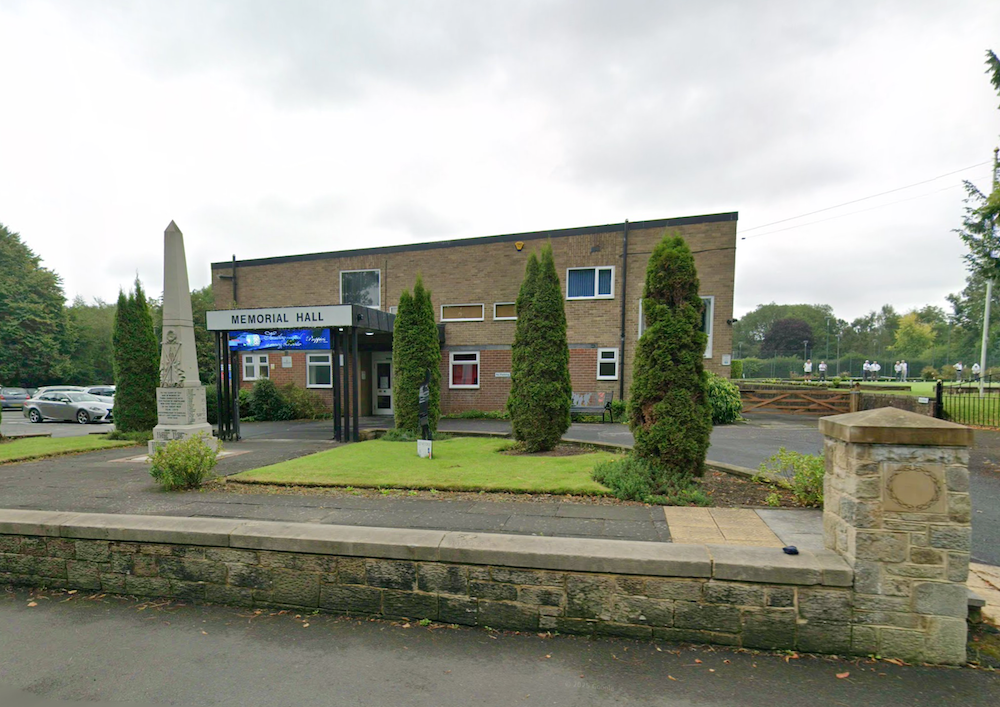
There were forty men who left Ponteland to fight in the First World War and were killed in the conflict. Even before the war was over discussions were taking place in the village as to how the men should be commemorated. At the first meeting held in July 1918 it was decided to erect a public hall for the use of the district and a committee was formed to organise fund-raising events to help pay for it.
Memorial Hall — audio guide
The initial plans were ambitious and included a large hall complete with a billiard room, reading rooms and a writing room, fronted by an impressive two-storied formal façade. Unfortunately economic conditions in the northern coalfields in the years following the war were very tough and it was impossible to raise the necessary funds to complete the whole project. Eighteen months after the first meeting only just over a quarter of the projected cost had been raised. The committee had however secured a site on the corner on the new Darras Hall Estate, just next to the village. This was Plot No. 56 on the Darrass Hall Estate site which had originally been sold for £171 in the 1910 auction sale of the plots. This was the most expensive plot on the whole site and consisted of 2.5 acres and was the closest to the village.
Almost four years after the war ended, in September 1922 the committee had barely raised a half of the funding which was required for the whole project. The decision was taken to
make a start on building work. The architects Graham and Hill of Newcastle scaled back their initial plans and the grand façade was postponed for the time being and work began instead on the single-storey meeting hall which stood behind the façade. This was completed and opened for business before the end of the year.
Over the succeeding years the building did eventually get a façade but a much plainer one than originally intended but the hall has been considerably extended in 1931, 1957 and 1969. Since it has been built it has succeeded in providing a venue for many public meetings and entertainments and continues to be well used today.