The Old Railway Line, Now a Bridlepath
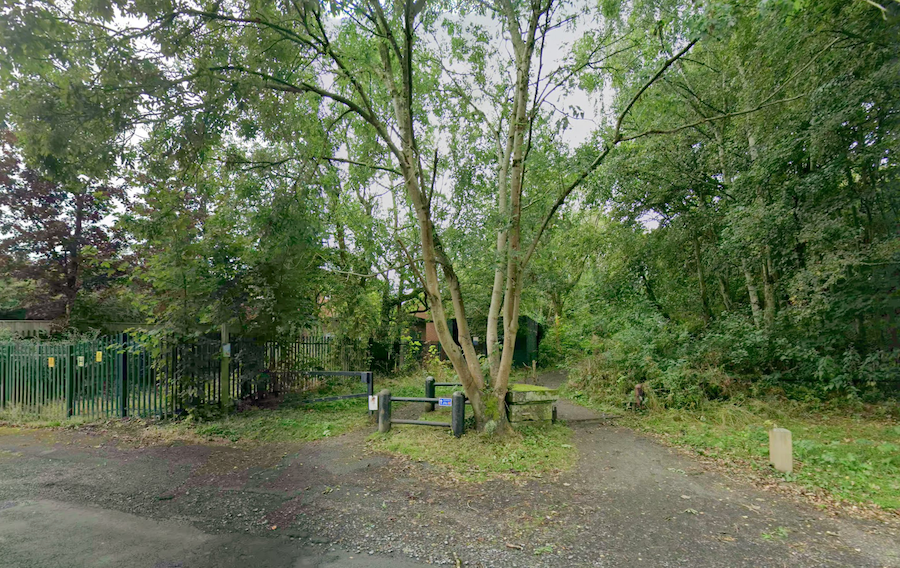
The success of outer London’s Garden City Suburbs such as Hampstead Garden Suburb owed much to their rail connections which allowed middle class Londoners to escape the dirt and pollution of the city in the years before the First World War even before car ownership became common place. Such was the expectation behind the Ponteland Light Railway connection with Gosforth. It was hoped that this would stimulate residential development in and around the village and less than two years later the area was selected for a giant new private residential estate, the Darras Hall Estate.
Old Railway Line — audio guide
The land almost abutted the new railway station at Ponteland but the estate was so large that its furthest corner was more than 2 miles away from the station. The estate developers realised that good transport links were essential for the commuters which they hoped to attract and despite the new estate having good new roads, a two-mile walk to the station every morning and evening would deter most prospective house builders.
In a bid to overcome this problem, the developers came up with a novel solution. They subsidised the building of a new branch line and station right into the centre of the estate. This took the form of a land grant to the railway company for the track and the station and a cash subsidy of £360 per annum. Because the railway company would only start to generate income once houses were built, each developer had to pay their share of the subsidy each year until he built a house on his land.
In 1909, the North Eastern Railway Company received parliamentary approval for the 1¼ mile extension to Darras Hall. It was an embanked single track railway with room for a second line if required in the future. The station was inaugurated in September 1913. It was hoped that this would spur on the building of new houses on the estate but within a year, the First World War had been declared and private house building was stopped for the duration of the War. There were only three trains per day and the commuter into Newcastle had to change trains at South Gosforth. Unsurprisingly, the line was never a financial success.
In 1924 the line was extended ten miles to a colliery called Belsay Colliery run by the Kirkheaton Colliery Company and the line carried coal and workers to the pit but the colliery was short-lived.
The 1920’s also saw the introduction of motor busses into the North East which had a dramatic effect on passenger numbers. The railway company applied to Newcastle Council to replace the train service with a bus service and passenger services were discontinued in 1929.
The line was unused for many years until the 1960’s. By then the estate was developing rapidly and the Management Committee recognised that open land would soon be in short supply. They put forward the proposal to adapt the line into a public footpath for walking and riding at an estimated cost of £4,000. This has now become a well-used link between Broadway and the village.