Lloyds Bank, Once Ponteland's Toll House
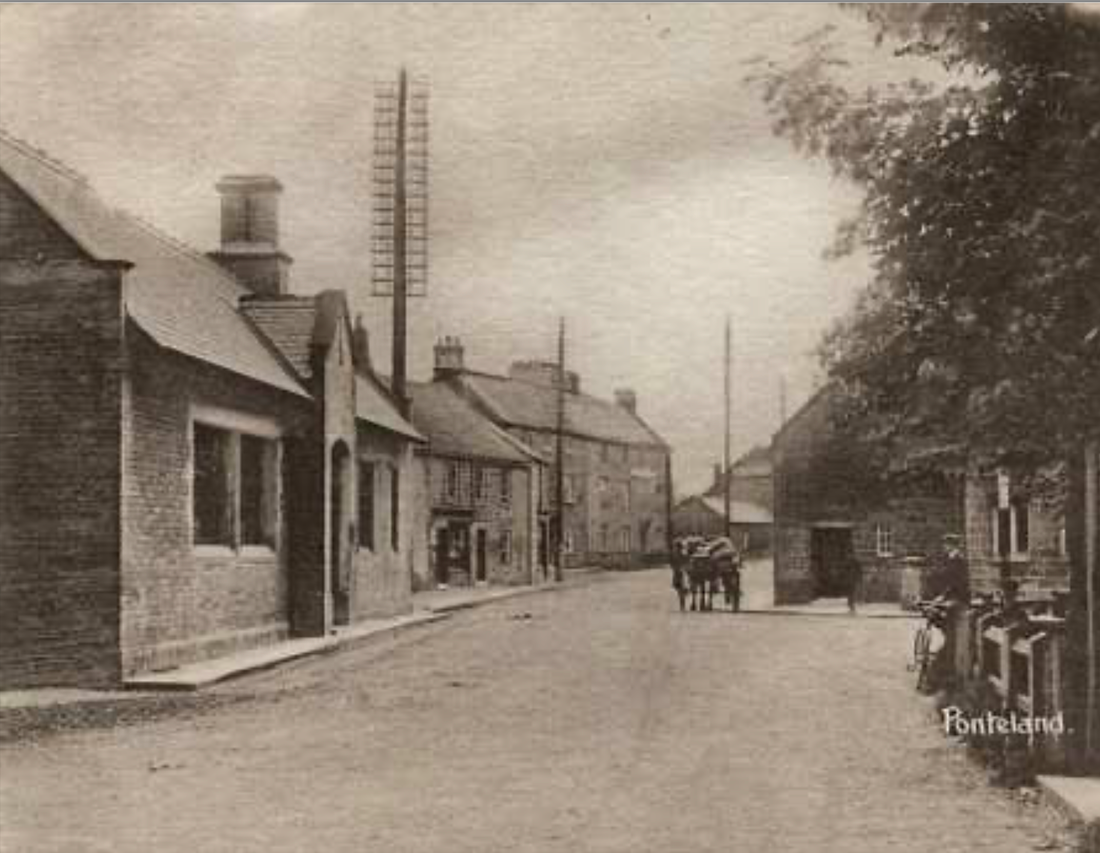
This was the site of Ponteland’s old Toll House controlling access to the turnpike road running south to Newcastle and north to Scotland. The Ponteland Turnpike Trust was established by Act of Parliament in 1748 and the Toll House would have dated from then. There was a gate across the main road controlling access to the toll road from the village. Towards the end of the 19th century local authorities started to assume responsibility for the roads and the turnpike trusts were phased out. The last toll charged here was said to have been levied in 1878.
Lloyds Bank — audio guide
The Toll House was then used for stabling the horses of a butcher who had his premises just behind the building. He then sold it on to Lambton Bank. Lambton Bank was the largest independent bank in Newcastle before it merged with Lloyds Bank in 1908. Ponteland was booming at the start of the new century and in 1904, they began trading here at first using the front room of the rectory. They bought the stables from the butcher and demolished it and built a new bank branch on the site in 1908.
It was an awkward site as it projected out of the general street line as the gate across the road controlling access had been positioned here. The building was a relatively modest one reflecting the elevation of the toll-house it replaced by only have one storey, which was unusual for a bank at this time. But it had a pleasing gable facing the road and some ornamental stonework in the prevailing brick and large Tudor-style chimneys. Lloyds operated from these premises for the next 59 years.
In 1967 Northumberland County Council had a scheme to improve traffic in the village and demolished the bank to make way for the approach to the roundabout at the end of the bridge and Lloyds relocated to more modern premises until quitting the village in 2022, the last bank which was left in Ponteland.