The Cottage Homes Water Tower
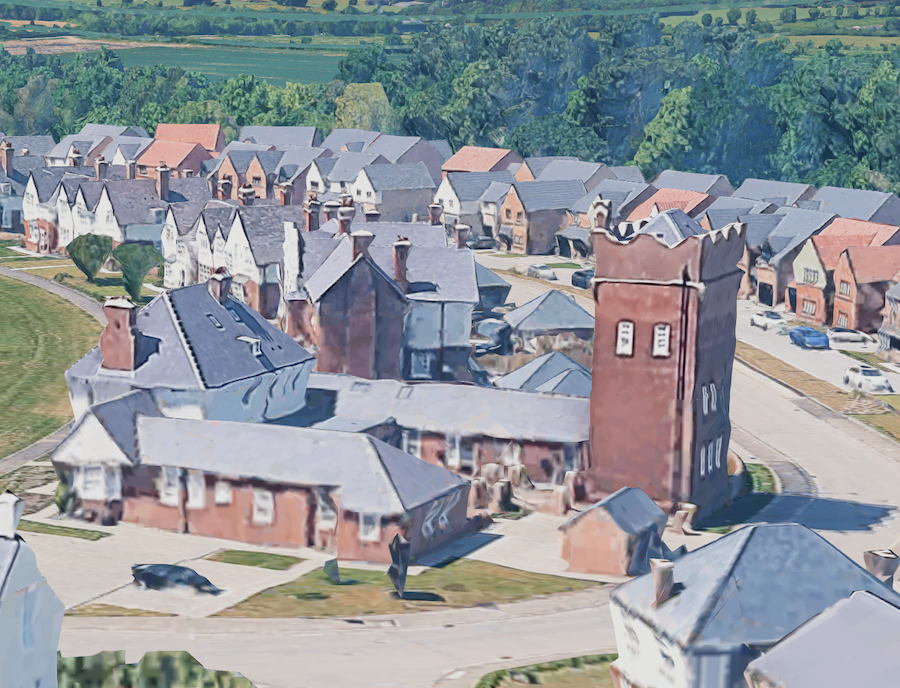
At the beginning of the 20th century, clean, piped water was still a rarity outside the major towns and cities. Hospitals and homes built at this time depended on their own private water supply which would often be a critical factor on where they were built. Smaller institutions could rely on handpumps or wells but larger complexes such as the Cottage Homes need something much more reliable.
Watertower — audio guide
This problem was overcome by a water hole bored down by the burn with a windmill to pump the water out of the ground and to carry it up the bank to this tower. Water towers were a feature of this part of Northumberland where the land is relatively flat. Elevating the water above the surrounding buildings ensured a constant pressure when you turned on the tap.
By the end of the 19th century, architects were incorporating these towers into their overall design concepts and including decorative features such as mouldings or here, a scalloped surround at the top of the tower. The tower was designed by the leading Newcastle firm of Oliver, Leeson and Wood and built in 1903.
The tower is about 50 feet high and provided a focal point for the Homes as it does now on the modern estate. When built, it was capable of holding 12,000 gallons of water from where it could be distributed over the entire complex.
In recent years, helped on by the publicity of a successful conversion project featured on the TV series Grand Designs, redundant water towers have become fashionable as quirky residences. Bellways have retained and incorporated the tower into Yeavering House.