The Sports Centre Wolfenden Built
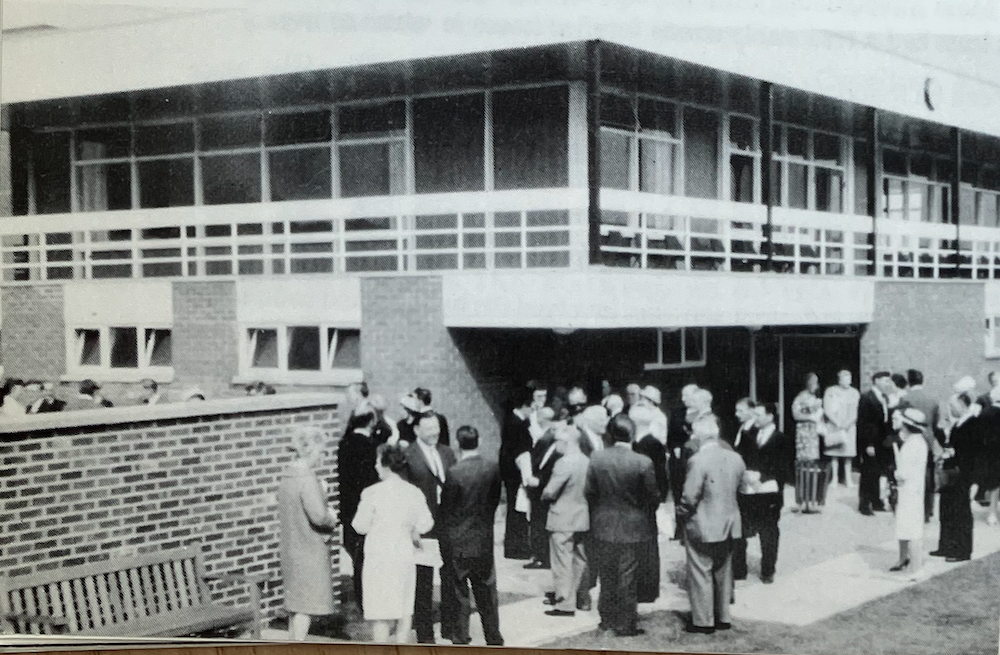
The Wolfenden Report on Sport and the Community had a huge effect on the provision of sporting facilities in this country. Before this report, public sporting facilities in the North East of England had generally been provided by the Miners Welfare Committee which built many recreational centres (rec’s) and provided sports grounds in the mining towns and villages. After the Wolfenden Report, sport was seen as a legitimate area of public responsibility and not just a private hobby. Local authorities started taking the lead in providing and coordinating sports facilities.
Sports Centre — audio guide
The Castle Ward Rural District Council responded to this and in the early years of the 1960’s negotiated to buy farmland which was owned by Merton College, Oxford, down Callerton Lane. By 1964, the council’s Playing Field’s Committee were also considering building a new sport centre at the site. This eventually came to fruition in 1967 when the new £90,000 sports centre was opened by Denis Howell, the Minister for Sport. It was described as “the first sports centre on this scale to be developed by a rural council in Britain”.
The centre was designed by the council’s Engineer’s and Surveyors Department and the contractor was the Ponteland firm, H. R. Atkinson and Co. Architecturally, it reflected the modernist aesthetic of the time: clean lines, prefabricated materials, and minimal ornamentation. The Evening Chronicle called it “a gem” of a building. The hall was 120 feet by 60 feet with a clear height of 28 feet below the roof supports. It had the latest type of cork floor all marked out in different colours for the games to be played. There were multiple changing rooms and showers. Above these was a lounge bar with a wide verandah on three side in front of “picture” windows overlooking the outdoor sports pitches.
The existing Ponteland United Football Club, Ponteland Cricket Club, Ponteland Badminton Club all applied to use the centre and a new rugby club was formed to take advantage of the facilities.
There were serious discussions about extending the centre with a swimming pool in the mid-1970’s but this was a time of increasing economic hardship in the area and the cost could not be justified and the plans were put on hold. It was not until 1991, after a 10-year campaign of fundraising, that the village finally got its swimming pool.
In the 25 years which had elapsed since the building of the sports centre, the aesthetics regarding public sport facilities had completely changed, a change reflected in their renaming, sport centres had become Leisure Centres. This time the architect engaged was not the council’s own but the top Newcastle firm of Napper Collerton, best known for the Newcastle Law Courts down by the Quayside. Their style leant toward modern / post-modern public architecture. The new building was added on to the existing sports centre with post-modernist quirks such the glass domed roof.
One of the key elements in the design of the sports facilities was the concept of “dual-use”. The idea that they would be used by local schools during the day for PE lessons and then open to the general public outside of school hours.
Unfortunately, although very popular, the centre suffered from a lack of investment when council budgets were under a lot of pressure and the facilities deteriorated.
The concept of “community use” became ever more prevalent in the 2010’s and 2020’s with leisure centres and schools being pushed to make better use of their resources and to make them available to more and more people. Planners and architects began to imagine Community Hubs: multi-purpose complexes that included schools, libraries, indoor pools, gymnasiums, fitness rooms, saunas, cafés, and meeting spaces. These were places not just to be educated and to play sport, but to spend time, socialise, and belong. The idea of the "sports centre" was giving way to a broader concept of "education and leisure for all" — a cornerstone of the post-war welfare ideal, through the provision of Community Hubs.
Education became a budget priority and the County Council through grants obtained from the Department of Education became increasingly able to spend money on these large projects. In 2020 the Leisure Centre on this site was closed down and demolished, replaced by the Ponteland Campus combining schools, library and sports and leisure on a new site just down the road. The site here has been redeveloped as one of the sports fields of the new hub.