The Pumping Station Down Eland Lane
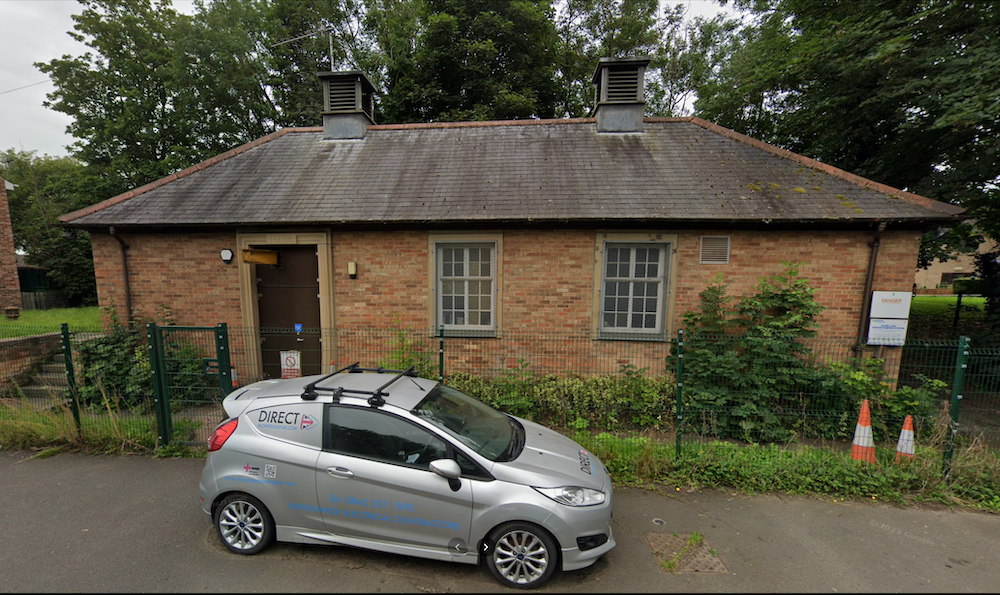
Tucked away down Eland Lane is probably one of the most important buildings in Ponteland. The efficient disposal of sewerage underpins our modern life and is a major factor in the dramatic improvements in lifespan seen over the past 150 years. In the UK in 1900 the average lifespan was about 47 years old. By 1940 this had increased to about 65 years.
Pumping Station — audio guide
Right up until the end of the 19th century, Ponteland’s sewage was untreated and just tipped directly into the River Pont. This was satisfactory from Ponteland’s point of view but very unpleasant for the towns of Bedlington and Blyth which were down river. One of the first measures of the newly created Northumberland County Council was to put pressure on Castle Ward Rural District Council to clean up its act.
In 1896 the council engaged the contractors D. Balfour and Son, Civil Engineers from Newcastle, to design a new sewage treatment scheme. This was a big investment for the council. Houses and businesses in the village would be connected to 6 inch glazed fireclay pipes which would feed into a 9 inch cast iron pipe which would cross the river to an underground well. The sewage would then have to be pumped using a petrol engine housed in an engine house, to settling and filter beds down river at a site adjacent to the river at the edge of a field down by Eland Hall Farm.
This system served Ponteland until the 1950’s. The years after the Second World War saw a rapid expansion in Ponteland’s population with new houses being built on the Darras Hall Estate and other new housing developments being constructed by the council and private building companies. The old system need replacement and in the mid-1950s a new system was proposed which would connect it to the Newcastle Corporation’s Ouseburn sewer and halt any discharge into the River Pont.
In September 1958, after three years work, the new system was officially opened. It involved the laying of more than 30 miles of new piping and the building of this new pumping station down Eland Lane. The station is powered by electricity with a stand-by diesel generator in case of any power outages.