Little Callerton Moor, a Lost Farm
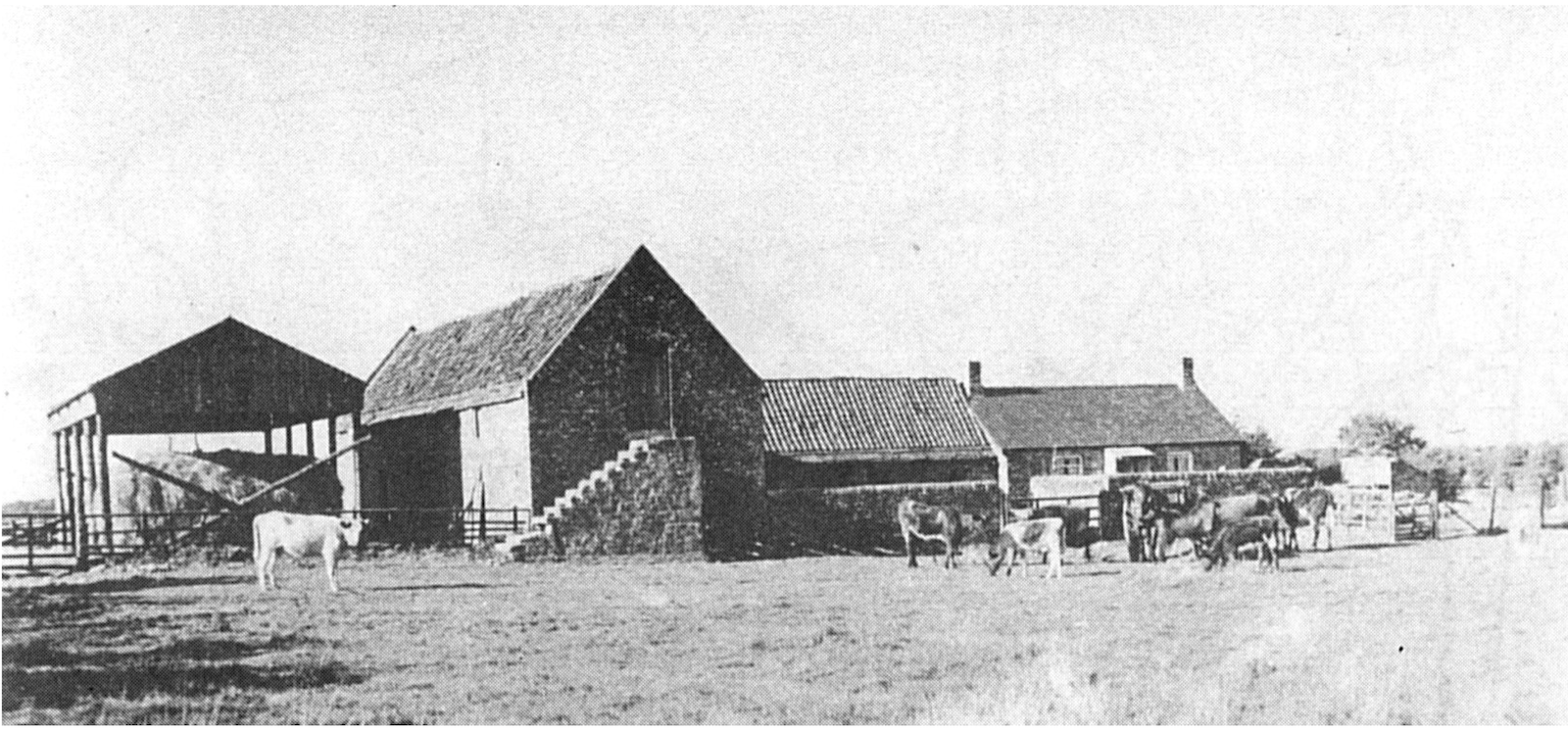
Most of the houses on the Darras Hall Estate have been built since 1960. The estate was created in 1911 but scattered in amongst all the houses are handful of remains of the farmhouses associated with the three farms whose lands were purchased to create the estate, Darras Hall, Little Callerton and Little Callerton Moor.
Little Callerton Moor — audio guide
Little Callerton Moor is not shown on Armstrong’s Map of Northumberland dated 1769 but it is shown on Greenwood’s Map of 1828.
The farm is offered to let in the Newcastle Courant of 1771 when it was described as well watered and fenced consisting of 130 acres of arable, meadow and pasture ground with grazing rights on Callerton Moor.
The farmhouse probably dated to around this time and was a small, single storey building. It was tenanted and often farmed together with its neighbour Little Callerton. When it and its land was sold in 1907 to the developers of the Darras Hall Estate, they were sold as a joint lot with the Callerton Moor fields forming the north western part of the lands disposed of.
The 1860 Ordnance Survey Map shows the same building layout as that captured in the photograph which has been dated to around 1885. There is a northern range of buildings including the farmhouse and an eastern range of two-storeys which would have been the granary.
The farm was no longer a working farm after 1910 when its lands were divided into building plots and sold at auction in 1911. The farm buildings and the land immediately surrounding it will have formed one of these building plots but the farmhouse itself was not demolished and became Little Callerton Moor Cottage, just off Runnymede Road on the new estate.
The house was modernised in 1965 by Mrs H. G. B. Mahon who ran a poodle parlour in Gateshead. She and her long-term housekeeper and friend, Elizabeth Robinson transformed what was then described as “one of Ponteland’s oldest properties”. The old part of the property has almost been subsumed within later additions but the part between the two chimney stacks is still essentially the 18th century farmhouse the former brick granary is still visible.