Eland Hall Farm, Let by the Bells in 1833
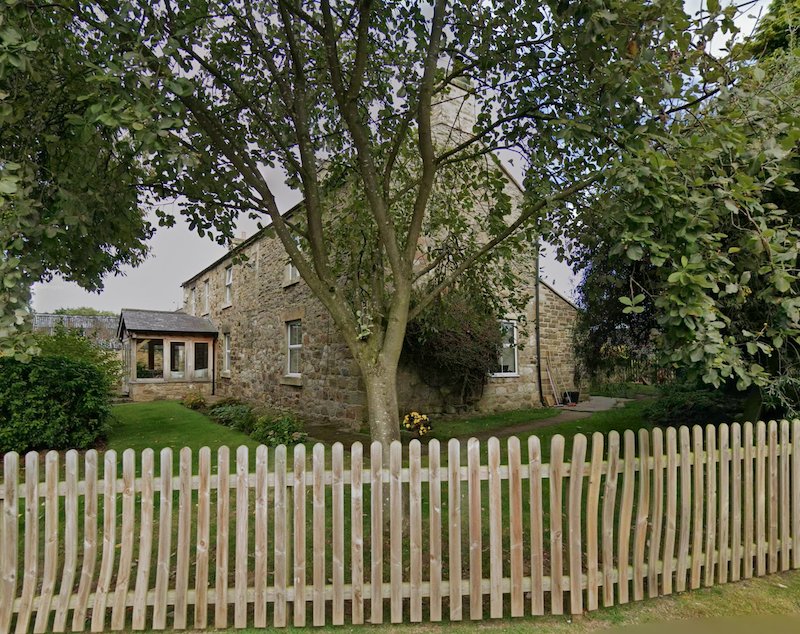
The first mention of Eland Hall Farm as a separate entity to the Hall itself is in 1833 when it was advertised to let along with some other farms belonging to the Bell family of Woolsington Hall.
Eland Hall Farm — audio guide
The Bells had purchased Eland Hall in 1829 from the descendants of the Gofton family who had owned it since the middle of the 16th century. There had probably always been a farm attached to the house since it was built but it was the Bells who were merchants from Newcastle who sought to capitalise on its commercial value. Its vicinity to and good transport links with Newcastle made the farm very valuable. It was described as consisting of 228 acres “within 7 Miles of Newcastle”.
By the 1850’s, the farm had shrunk to 125 acres. The 1859 Ordnance Survey Maps shows two distinct groups of farm buildings, so this may have been when the land was split between this and the North Farm.
In 1856 and in 1865 the farm was offered for sale as a joint lot along with the hall. The 1856 sale notice places a lot of emphasis on the closeness to the growing market of Newcastle.
“…its situation so near Newcastle affords the greatest facility for marketing its produce, besides and abundant supply of the various kinds of manure, so necessary at the present day for the proper management and cultivation of the soil”.
In the 1865 notice it was then described as a Farm and Dwelling House of about 142 Acres of “the best Land in the County”. The tenant then was Joseph Stobart. In the 1881 census George Stobart is living here with his wife, seven sons and two daughters and one grandchild. He died at the farm in 1894. His obituary recorded that he was highly esteemed among his agricultural brethren in Castle Ward and was an “excellent judge of horses” and “greatly interested in political and social questions”.
The 1891 census was the first one to distinguish between Eland Hall Farm and Eland Hall North Farm. The Stoberts are shown as living in North Farm and the Hall Farm is occupied by John Meeks – a family whose connection with Eland Hall Farm continues to this day.
The size of the houses is listed in the 1911 census and Thomas Meek is listed as living in an eight-room house at Eland Hall.
Up until 1920, the farm was still owned by the Bells of Woolsington Hall and was only tenanted by the Weeks. In the early part of the 1920’s, the Bells sold off many of their Northumberland landholdings and the Meeks were one of the tenants to take advantage of this and bought the freehold of their farmhouse, 192 acres of land and a three-roomed cottage for £9,000.
In 1927, the Meeks leased 100 acres of their land to the newly created Ponteland Golf Club for their course, with the land being sold to the club outright in 1947.
There were proposals to build on the farmland from the early 1960’s but the council blocked them so long as there were un-developed plots still remaining on the Darras Hall site. By the 1970’s the concept of “green belt” restrictions were in place but the local building company Bellways still went ahead and bought the fields between the farm and Belle Villas in anticipation of these restrictions being eased. They submitted a planning application in 1980 to build a new estate on the land and after a lot of discussion these plans was approved.
The Meeks were still very active in local farming and in 1997, Gordon Meeks was elected chairman of the Northumberland branch of the National Farmers Union.