From 1967 Bank to Cafe by Design
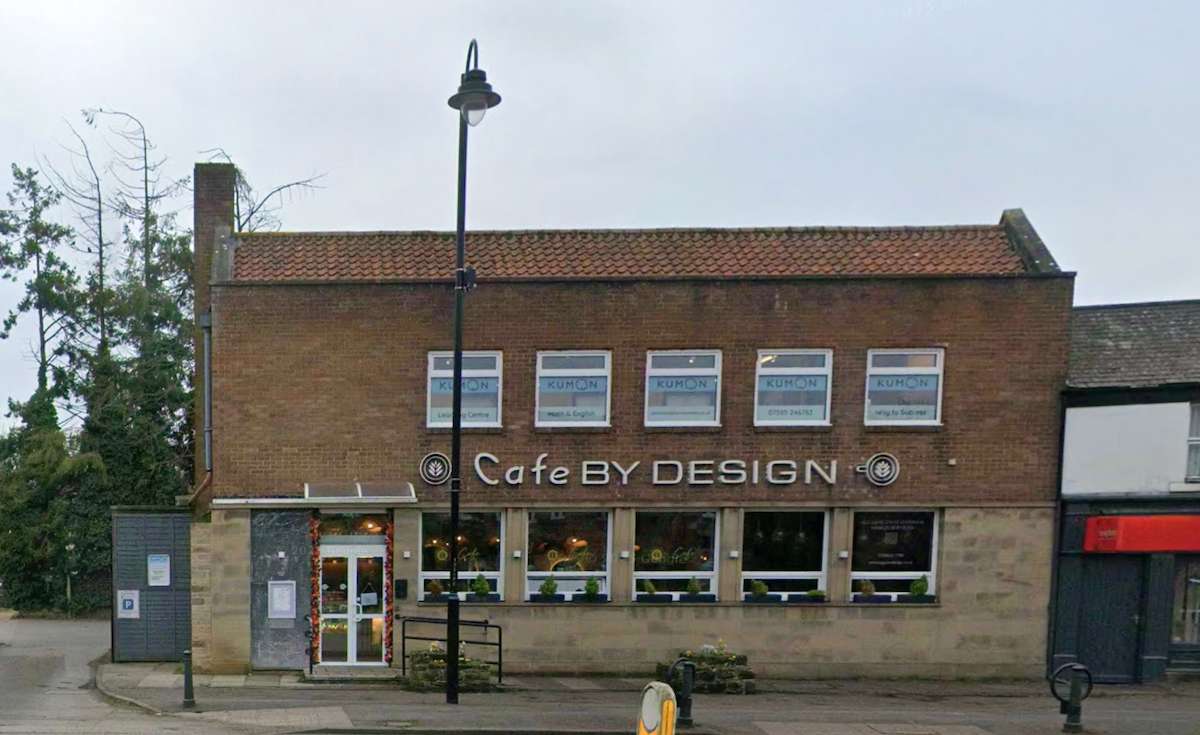
Cafe by Design is housed in a building dating from 1967 which was built as a bank.
Cafe by Design — audio guide
There have been dramatic changes on the UK’s High Streets in recent years but what we tend to forget is that this is just the latest in a long line of changes. The High Street reflects wider changes in the society and we can trace the evolution of these in the buildings they produce.
The first Lloyds Bank in Ponteland was in an ornate single-storey building which stood in what is now the middle of the road just in front and a little more towards the roundabout of the current building. That in turn had been built on the site of a toll house which collected the fees paid by users of the Ponteland – Newcastle Turnpike Road laid down in the 18th century.
The time around 1900 saw a big change in UK banking which affected the layout and the buildings in every town and large village in the UK. In the 19th century banking was business to business, or confined to the very wealthy and most banks were local, regional banks and only present in the larger towns and cities. From the 1890’s onward, there began a period of amalgamations and takeovers creating the large banks that we know today. In Ponteland, the Newcastle based Lambton & Co. which had built the first bank was absorbed by Lloyds.
The big banks began offering current accounts and savings accounts to middle class customers and small traders and established a branch network to service these, offering a safe place for people to save their money.
This had a big effect on the look of the High Street in the market towns they expanded to with old buildings built in a traditional style out of local materials being replaced by the grand, solid new buildings built by the banks mostly in a neo-classical style to project trust, permanence, and authority.
The next big change came with the 1960’s. Increasing reliance on technology meant that employers and government agencies encouraged people to open bank accounts for wage payments. There was a massive expansion in the number of bank accounts in the UK which doubled between 1960 and 1970 as banking spread from the middle class and became more universal. This changed the nature of the banks offering these services and in turn, impacted the High Street. First of all, banks expanded their networks with branches popping up in even quite small villages. Secondly, the appearance of banks changed. Now they wanted to appear modern, efficient and accessible, not intimidating and exclusive which had previously been the case.
This is reflected perfectly in the new building Lloyd’s built in Ponteland in 1967. The new bank was two stories built out of brick but with a stone clad ground floor to help it blend in to the more traditional architecture in Ponteland. But unlike other buildings, this is quite a stark building with almost no ornamentation. Ten large windows faced the main road making it light and airy. Inside it was all modern with plaster walls and a vinyl tile floor with a heated metal tile ceiling incorporating modular fluorescent light fittings. They also provided a small car park to the rear for their customers to use while transacting their business inside.
Lloyds was one of the four national banks with branches in Ponteland at that time and they had to distinguish themselves. Branding became very important. The bank here had Lloyds Bank in large letters where the current Café BY DESIGN lettering is in place, but with Lloyds it was in their standard green colour which was an integral part of their branding.
The days of communities as small as Ponteland having four separate banks along their High Street changed around 2000 when banks began offering online banking via computers. The pressure only increased by the 2010’s when smartphones allowed mobile banking. The number of physical branches collapsed.
The bank here lasted longer than most but once again, Ponteland has reflected the national trend. Despite a campaign against its closure, the bank finally closed its doors as a bank in 2022.
The most common reuse of the former bank buildings has been to turn them into cafés, or bars and restaurants. Modern consumers spend more on experiences (food, leisure, ambience) than on physical goods. A café provides a small, affordable treat – an everyday luxury which helps explain why they are so popular in Ponteland today.